
What is Reggio Emilia?
Understanding the Reggio Emilia approach to early learning
The Reggio Emilia philosophy of early childhood learning takes a child-led, inquiry-based approach with a focus on creativity, exploration, and collaboration. Originating in Reggio Emilia in northern Italy, this philosophy views children as capable, curious learners who construct their own knowledge through experiences and relationships.
At Kids ELC, we’re proud to offer a Reggio Emilia-inspired curriculum, blending its core principles with evidence-based early learning practices to create an early childhood setting tailored to Australian children and families.
The origins of Reggio Emilia
Reggio Emilia first emerged in northern Italy after World War II. Driven by the vision of Loris Malaguzzi, a psychologist and educator, the Reggio Emilia approach was created in conjunction with local parents and families.
They aimed to create an early childhood education system that recognised children as capable, independent thinkers, encouraging them to explore their environment, express their ideas, and actively participate in their communities.
Key principles of the Reggio Emilia approach
The Reggio Emilia approach is built on a deep respect for children as active participants in their own learning. It encourages exploration, creativity, and collaboration, ensuring children have the freedom to express themselves and engage with the world in meaningful ways.
This philosophy is based on several key principles. Here’s how these foundational pillars guide us at Kids ELC.
The image of the child
At the heart of Reggio Emilia is the belief that children are capable, intelligent, and full of potential. Instead of viewing children as empty vessels waiting to be filled with knowledge, we believe they play an active role in their own learning journey. As a childcare provider, it’s up to us to provide them with an enriching environment full of opportunities so they can explore, problem-solve, and make sense of the world around them.
Children take an active role in their learning
Under the Reggio Emilia approach, children are actively involved in the direction of their learning and education. Rather than being confined to a fixed curriculum, we embrace an emergent program that’s based on each child’s individual needs and interests.
Under this approach, children and educators work together to co-create learning experiences where children are encouraged to ask questions, experiment, and guide their own discoveries. Educators act as facilitators, helping children expand their ideas and deepen their understanding by asking questions and challenging their thinking.
Learning happens through experience
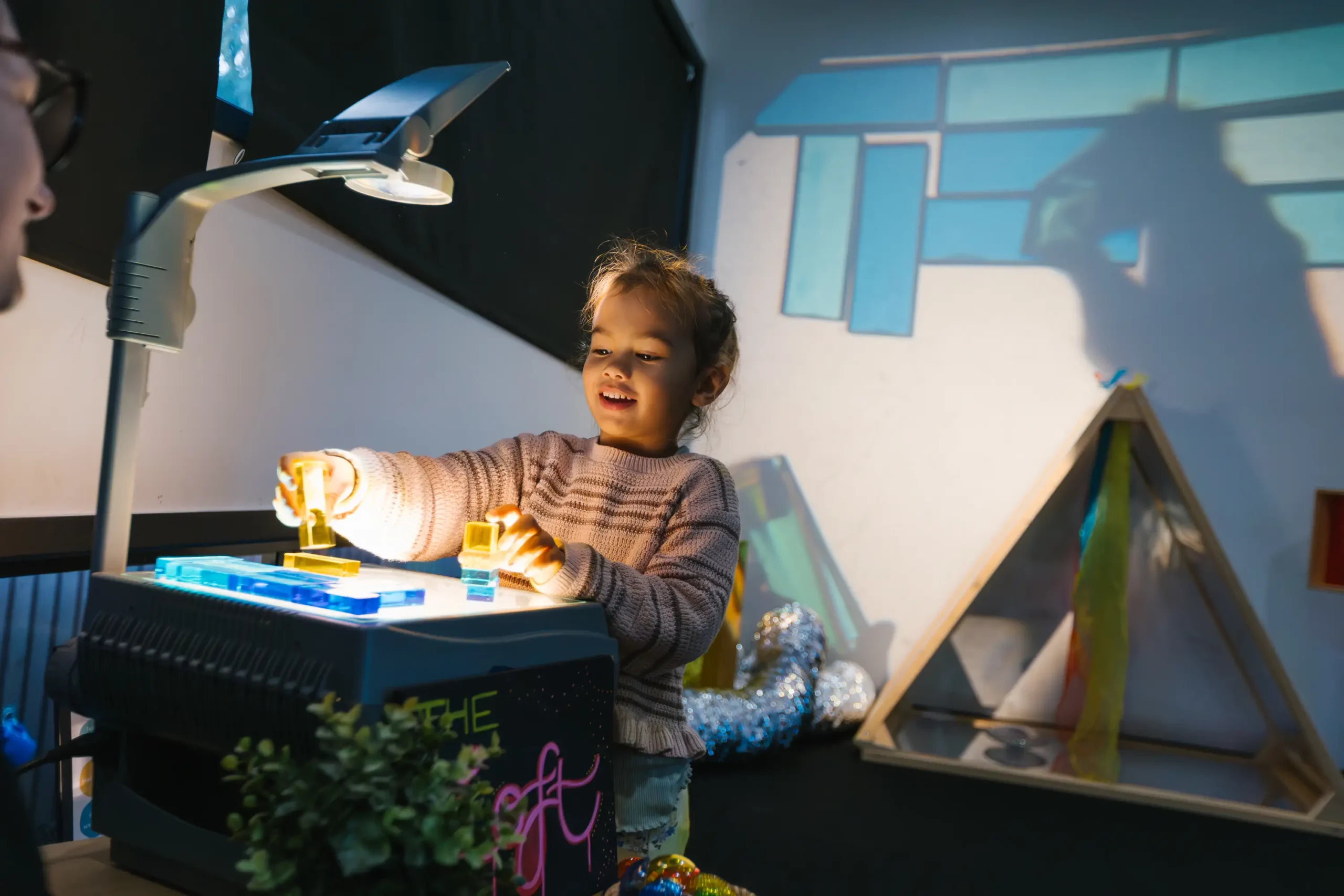
Play-based learning and hands-on exploration are fundamental to effective learning. From touching and moving to listening and observing, providing sensory-rich experiences is essential to helping children build knowledge in a natural and engaging way. Play, art, and outdoor exploration are crucial tools for discovery.
Relationships are central to learning
While play is important, learning is also viewed as a social process. Children develop understanding by interacting with peers, educators, materials, and their surrounding environment. It’s through collaboration and discussion that they learn to express ideas, listen to others, and build meaningful connections.
The Hundred Languages of children
Referred to as the Hundred Languages of children, the Reggio Emilia approach embraces multiple forms of communication and expression. From drawing and painting to music, movement, and storytelling, children express themselves in a variety of extraordinary ways. The concept of a hundred languages is symbolic, allowing children to share their ideas in ways that feel most natural to them.
The role of the educator
The Reggio Emilia approach views educators and early childhood teachers as co-learners and collaborators, rather than just instructors. Their role is to observe, listen, and guide rather than dictate what and how children should learn. Educators co-construct knowledge with children by supporting their natural curiosity and helping them explore ideas more deeply.
Documentation of learning
Educators also play a key role in documenting children’s learning by recording observations, photographs, and children’s work to reflect on learning. Documentation makes learning visible to children, families, and educators, and informs future planning.
The environment as the “third teacher”
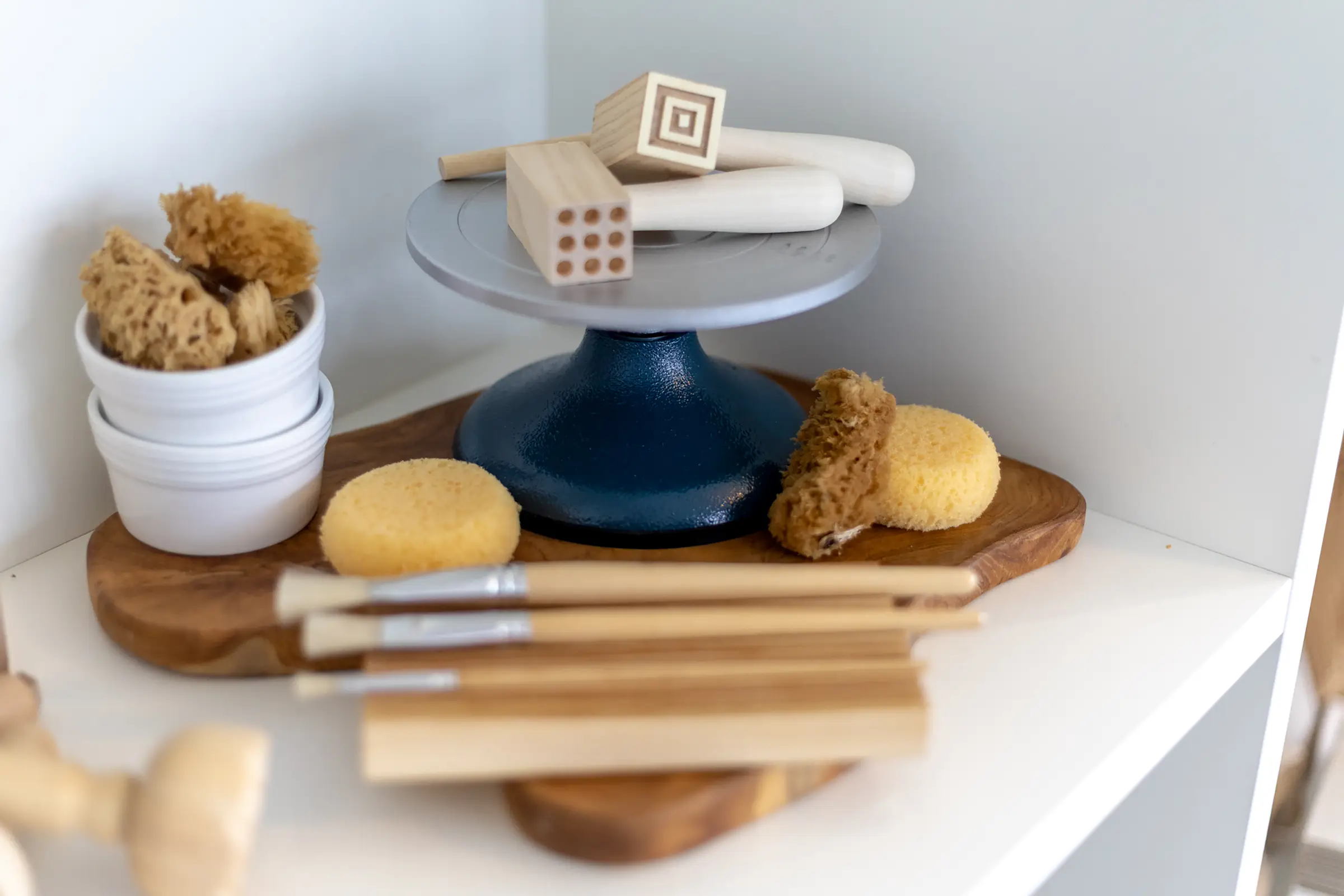
In a Reggio Emilia-inspired childcare setting, the environment is often referred to as the “third teacher”. A thoughtfully designed environment shapes how children interact, explore, and learn. The furniture, objects, and materials are often open-ended, allowing for multiple uses and simple modifications. By engaging deeply with the surrounding environment, children can broaden their understanding and express themselves in a variety of ways.