There are several childcare philosophies used across the early childhood education sector.
No single philosophy is considered the “best” approach, but if you’d like to learn more about the available learning styles, we can help you determine which is the best fit for you and your child.
- Reggio Emilia: Child-led, project-based learning, using the environment as the third teacher and a strong emphasis on community collaboration.
- Montessori: Child-centred, self-paced educational approach that emphasises hands-on learning.
- Steiner/Waldorf: A holistic, child-centred philosophy that emphasises rhythm and rituals, nature and the arts, with minimal early technology.
- Play-Based: Child-led, spontaneous, and guided play through intentional teaching and aligned to the EYLF.
To see KIDS ELC’s Reggio Emilia-inspired approach in action, book a tour with your local centre.
How to choose: Labels vs fit
If you’re wondering which childcare philosophy is best, the honest answer is: it depends. What matters most is how well a philosophy fits your child’s temperament, your family values, and what you observe when you visit a centre.
Many early learning centres use blended approaches, drawing on multiple philosophies while aligning with Australia’s Early Years Learning Framework (EYLF) and the National Quality Standard (NQS). Rather than focusing on labels alone, look for how learning is planned, how educators interact with children, and how families are included.
At KIDS ELC, our program is anchored in the Reggio Emilia philosophy and complemented by an evidence-based, interet-led curriculum. This supports strong outcomes under NQS QA1 (Program and Practice) and QA6 (Collaborative Partnerships with Families).
Where KIDS ELC fits: A Reggio Emilia-inspired approach
Core beliefs
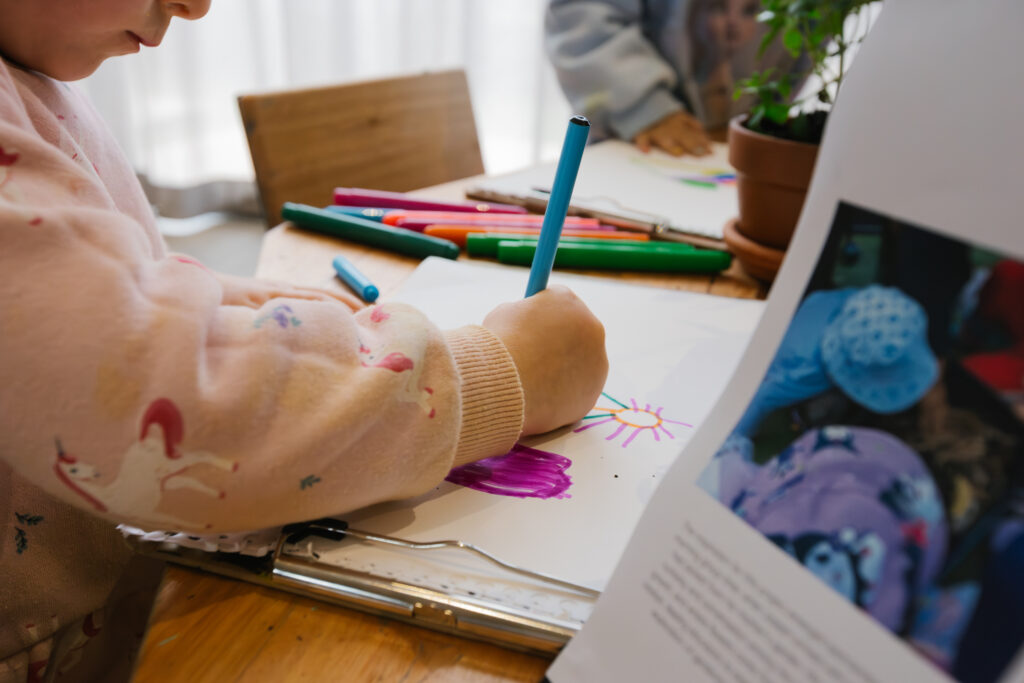
The Reggio Emilia childcare approach views children as capable, curious, and full of potential. Learning is co-constructed between children, educators, and families, with the environment acting as the “third teacher.”
Key elements include:
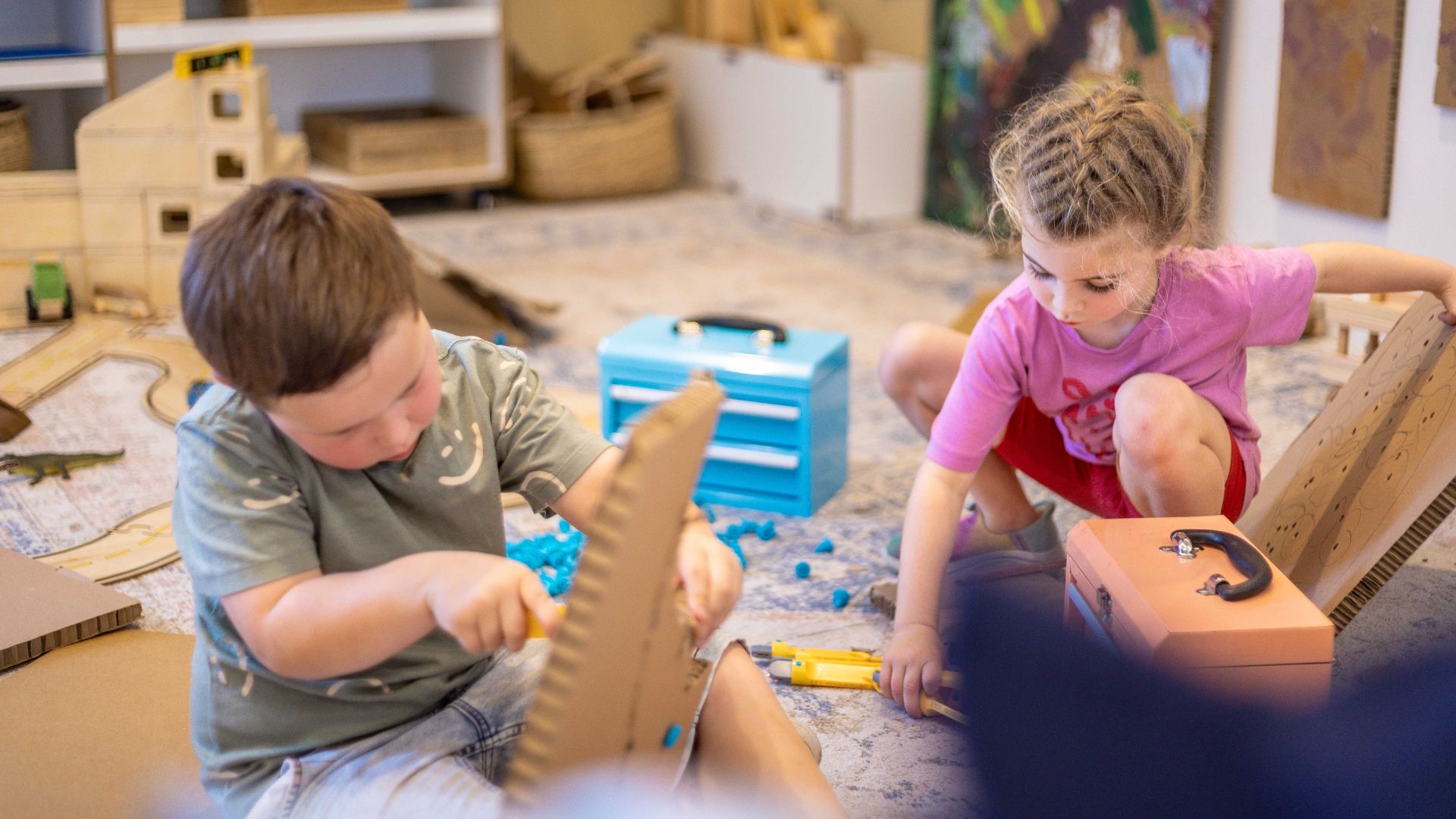
- Project work and inquiry driven by children’s interests.
- Documentation of children’s processes to make learning visible.
- The 100 languages of children theory: languages are symbolic and open to the many ways children think, express, and learn.
- Strong partnerships between children, family, and educators.
What you’ll see at KIDS ELC
In a Reggio Emilia-inspired KIDS ELC environment, learning is visible and evolving through:
- Long-term projects and inquiries shaped by children’s questions.
- Thoughtful provocations that invite exploration.
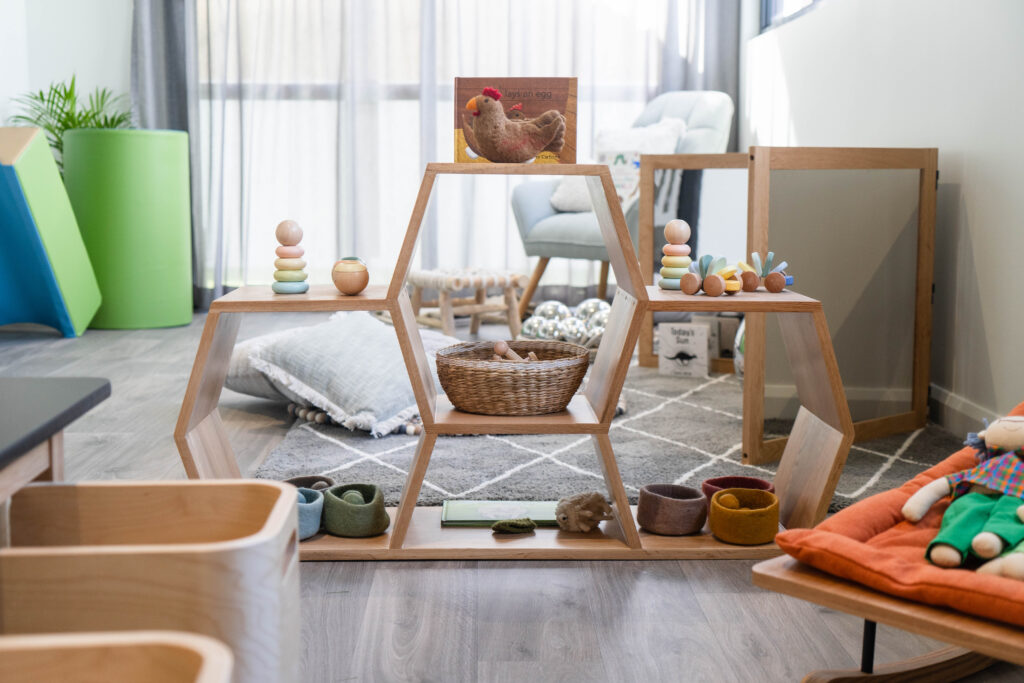
- Beautiful, flexible spaces using natural materials, light, and shadow.
- Learning goals shaped with family input.
- Educators acting as researchers and co-learners, not instructors.
Children learn best through intentional, play-based programs that respond to who they are (QA1).
Tour cues
When you tour a KIDS ELC, you might notice:
- Documentation panels, learning stories, and portfolios.
- Loose parts and open-ended materials.
- Rooms that change as projects deepen.
- Family photos, artefacts, and shared goals.
Well-designed spaces support learning, wellbeing, and sustainability (QA3).
Reggio vs Montessori vs Steiner: What’s the difference?
Not sure how these educational approaches really differ? This quick comparison breaks it down in a clear, practical way.
| PHILOSOPHY | CORE BELIEF | EDUCATOR ROLE | LEARNING ENVIRONMENT | WHAT YOU’LL SEE ON A TOUR (NQS) | BEST FOR FAMILIES WHO… |
| Reggio Emilia (KIDS ELC) | Children are capable learners; learning is co-constructed | Co-learner Guide Documenter | Flexible, evolving spaces; environment as the “third teacher” | Project displays, learning documentation, open-ended materials, changing room layouts (QA1, QA3, QA6) | Value collaboration, creativity, visible learning and strong family partnerships |
| Montessori | Independence through self-directed learning | Observer Facilitator | Calm, ordered, child-sized spaces | Practical-life trays, sequenced materials, self-care stations (QA1, QA3) | Prefer structure, independence and focused individual work |
| Steiner / Waldorf | Rhythm, imagination and nature | Role Model Storyteller | Warm, predictable, nature-rich environments | Seasonal tables, storytelling circles, natural fibres, simple toys (QA1, QA3) | Value routine, creativity, sensory play and low-tech learning |
| Play-Based Learning | Play drives learning when intentionally supported | Facilitator Scaffolder | Balance of free play and small-group spaces | Educators engaged in play, visible planning, and learning portfolios (QA1, QA5) | Want flexible, EYLF-aligned learning with strong social development |
How to decide what approach fits your child
The right fit will depend on the needs of your family and your child’s temperament:
- High-energy or curious explorers: Reggio-inspired or play-based learning programs with flexible spaces and open-ended learning.
- Focused, task-oriented children: Montessori environments with clear structure and sequenced activities.
- Slow-to-warm or sensory-seeking children: Steiner/Waldorf settings with strong rhythm, or Reggio Emilia environments with responsive, individualised support.
Also consider practical factors, such as sleep routines, mixed-age groupings, open-ended versus step-by-step tasks, and the level of involvement you’d like as a family.
Many families find value in visiting a childcare centre more than once and asking about orientation and transition support.
What to ask on a tour
To get a feel for how your preferred centre demonstrates the NQS Quality Areas, you’ll want to arrange a tour. Below are a few question ideas to help you gather the information you need:
- “Can you show me a recent project and how children shaped it?” (QA1)
- “How does the environment change as learning evolves?” (QA3)
- “How do families contribute to learning goals?” (QA6)
- “How is learning documented and shared with families?” (QA1)
- “How are children supported if they’re not engaging?” (QA5)
FAQs
Is KIDS ELC Montessori or Steiner?
No – KIDS ELC is a Reggio Emilia-inspired QLD childcare provider.
Reggio vs play-based learning childcare – what’s the difference?
Both value play, but Reggio places stronger emphasis on project work, documentation and the environment as the third teacher.
What will I see in a Reggio room?
Project traces, flexible spaces, open-ended materials, portfolios, and shared learning.
Can centres blend philosophies?
Absolutely!. Ask your provider for specific examples of how this looks in practice.
Let’s find the right fit for your child!
Kids ELC’s innovative, Reggio Emilia-inspired and play-based curriculum is designed to help children build the skills they need for a lifetime of learning. Book a tour to learn more about our approach or contact us to join the waitlist. Our qualified Educational Leaders are here to help.