Children aren’t born with the ability to manage emotions or navigate relationships. In the first five years, social and emotional development in early childhood shapes how children understand and express emotions, build relationships, and develop a strong sense of self.
The people children spend the most time with, including family and educators, play a key role in this development. This is reflected in the Early Years Learning Framework (EYLF), particularly Outcomes 1 and 2, which guide educators in supporting children’s identity and sense of connection during these formative years.
What is social and emotional development in early childhood?
Social and emotional development in early childhood refers to the stages of key growth in your child’s awareness and management of both themselves and others. As children get older, they develop emotional regulation, self-awareness, empathy, relationships, confidence, and resilience, which can be affected by their experiences, environment, and the people around them. It happens in stages, known as developmental milestones:
- Birth to 12 Months: Social development begins as infants form attachments and respond with gestures, such as making eye contact or smiling at familiar people.
- 1 – 2 Years: Toddlers begin to express strong emotions while showing early independence, such as showing affection to familiar people, becoming aware of other children, and showing more intense emotions, like frustration or excitement.
- 2 – 3 Years: Social awareness developes rapidly in this stage, with children starting to demonstrate empathy, play alongside others, show pride in their achievements, and test boundaries.
- 3 – 4 Years: Children begin to develop stronger friendships and emotional understanding, take turns, share, show concern for friends who are upset, and speak more clearly about their feelings.
- 4 – 5 Years: Emotional regulation and social confidence continue to grow during this timeframe, with children able to express feelings through words rather than behaviour, follow social norms more easily, and manage their emotions autonomously.
- 5 Years+: As children enter school age, their social and emotional skills become more complex as they’re able to understand fairness, cooperate more effectively, build deeper friendships, show more independence, and solve simple conflicts within their peer group.
Every child grows and develops at their own pace, so these timeframes are just a general guide. If you ever have questions or concerns about your child’s development, you might like to have a chat with your GP, paediatrician, or child health nurse for support or an assessment.
Why social and emotional development matters
Social and emotional development supports children throughout their lives, influencing how they learn at school, interact with others, approach future work, and develop their sense of self. The latest research shows early social and emotional development has many benefits, including:
- Successful transitions to school as children gain confidence, can focus and are ready to engage in learning.
- Stronger self-regulation, helping children manage their emotions and behaviour.
- Improved relationships with other children and teachers.
- Better mental health and emotional wellbeing.
- Higher long-term success in education and life.
The role of early learning centres
High-quality, formal childcare has been linked to positive effects on social and emotional development in children. To help maintain a higher standard of care for the more than 1.5 million children in Australia who attend childcare centres, the NQS and EYLF Outcomes provide robust regulations to early childhood services on how to support emotional development in early childhood.
How early learning environments support social and emotional development in early childhood
A key focus of training for early childhood educators revolves around nurturing social and emotional development in childhood. In accordance with the NQS and EYLF Outcomes, our educators and support staff help support children through:
- Intentional teaching, where educators make deliberate, purposeful, and thoughtful decisions and actions to benefit your child (QA1).
- Play-based learning, responding to a child’s natural interests and disposition towards learning through play (QA1).
- Positive, secure educator-child relationships, guiding children through role-modelling as a person they trust (QA5).
- Providing warm emotional support by helping children name feelings and gently build self-regulation skills at their own pace (EYLF Outcomes).
- Group learning experiences, leaning into your child’s natural enjoyment of learning when in fun group environments (EYLF Outcomes).
How to support emotional development in early childhood
As an adult, you’ve already developed your social and emotional skills, so it can be challenging to understand how to help your child navigate their emotions in the early years. Learning how to support emotional development in early childhood at home can positively impact your child’s ability to better understand, manage, and express themselves, paving the way for lifelong success.
Supporting emotional development in early childhood at home
- Lead by example with emotional language, using phrases such as “I feel frustrated because…” or “I feel disappointed it’s raining.”
- Listen and validate your child’s feelings before correcting their behaviour. For example, using phrases such as “I can see you’re upset. You’re allowed to feel this way,” or “I understand you’re feeling this emotion because of this reason, which makes sense.”
- Follow predictable routines to create an environment where your child feels safe and stable, without stress or anxiety from change.
- Encourage problem-solving by acting as a facilitator rather than a fixer. Asking open-ended questions, such as ‘What can we try?” can often help children explore solutions on their own.
- Read books about emotions, using examples from their day or a time they may have felt a similar way to help them identify feelings.
- Allow safe independence, letting your child make safe mistakes to learn.
Strategies for educators
Ongoing research continues to shape how early childhood educators support children’s social and emotional development. At our centres, we use a range of strategies aligned with the NQS to help foster these skills.
How to support emotional development in early learning settings
- Use co-regulation techniques when a child is experiencing intense emotions, interacting with them in a soothing way while modelling calmness. Use co-regulation techniques when a child is experiencing intense emotions, interacting with them in a soothing way while modelling calmness.
- Use intentional language modelling, using phrases such as “I can see you are frustrated by that.”
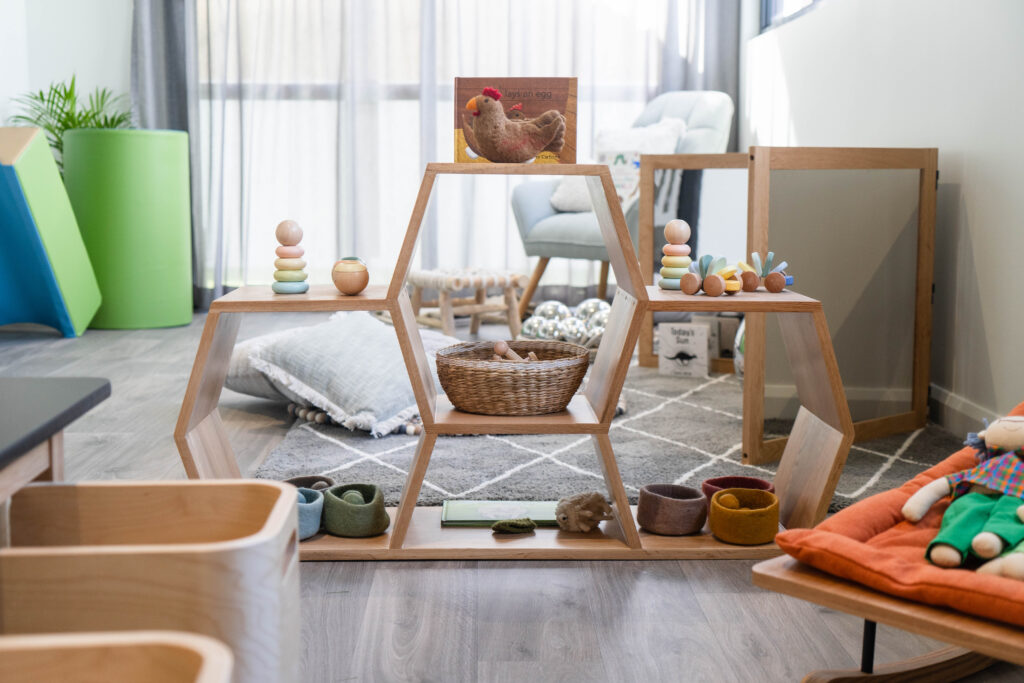
- Create quiet, cosy spaces in the studio where children feel safe and supported, giving them opportunity to regulate their emotions.
- Teach empathy through play, such as role-playing with dolls to act out scenarios, using cards to match emotions with faces or having kindness rituals where children do something nice for someone else.
- Support children through transitions or changes by gently explaining what’s coming in advance, acknowledging how they might feel, and supporting to create a sense of predictability through routines.
- Work in open communication with families, sharing updates, discussing progress together, and collaborating in partnership to align strategies.
Learn more about our approach to social and emotional development
At KIDS ELC, we take a proactive approach to nurturing confident, resilient children by aligning our innovative play- and inquiry-based curriculum with the EYLF and NQS to foster secure, trusting relationships that lay the foundation for lifelong learning and wellbeing. We warmly invite you to book a tour and experience firsthand how our passionate educators make learning engaging, meaningful, and fun while supporting children’s social and emotional development every step of the way.