Early learning approaches play a key role in shaping your child’s future. They help children build the skills they need for a lifetime of learning, supporting key thinking, social, and emotional growth during this vital stage of brain development. While several methods are used in the early childhood education (ECE) space, play-based and inquiry-based learning are two common approaches.
If you’re curious about different learning styles in early childhood, we’re here to help you understand what these approaches look like in practice and why they matter.
What is play-based learning?
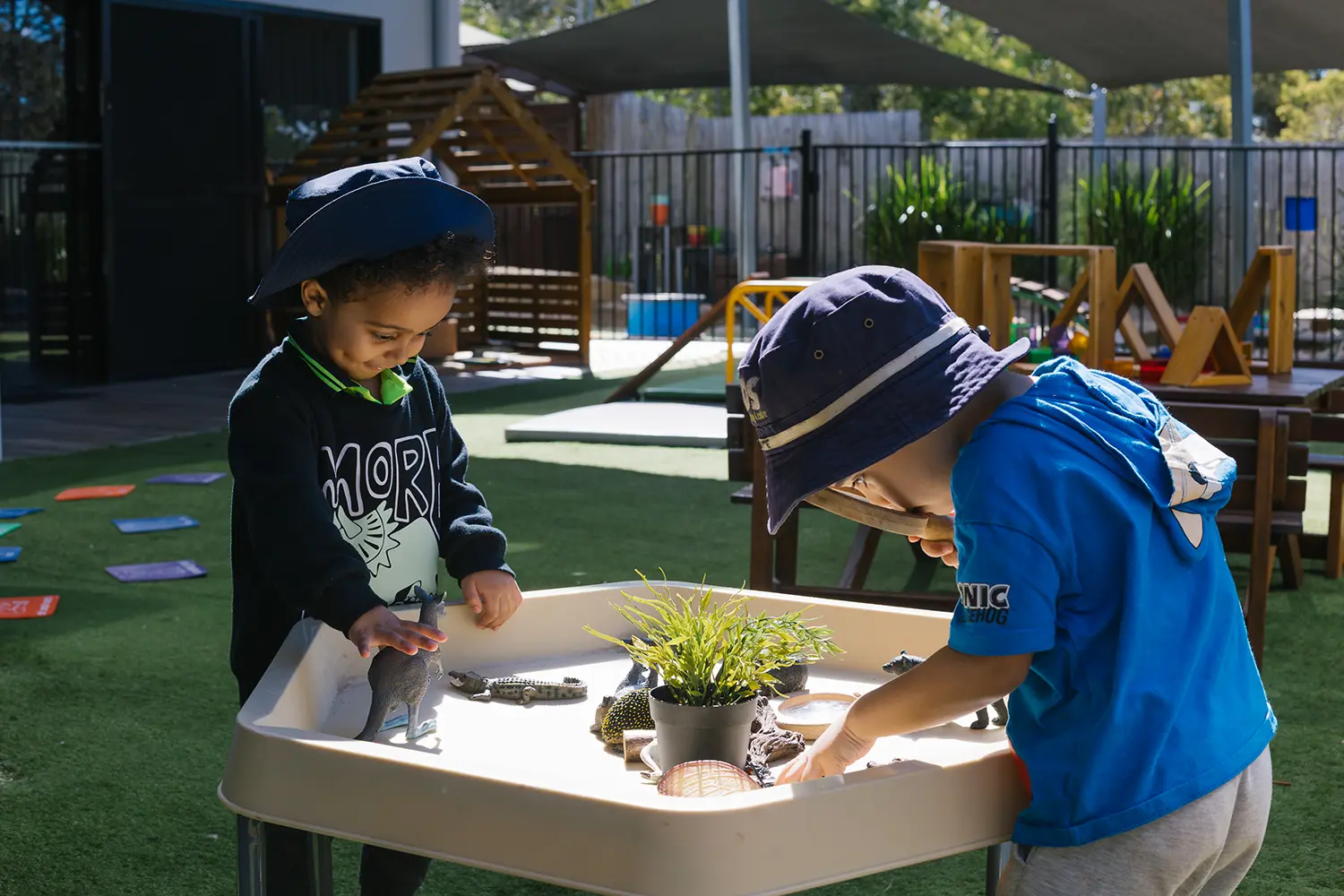
Play-based learning provides children with numerous opportunities to explore, imagine, and interact with people, objects, and their surroundings. This approach is centred around structured and unstructured play and activities. Think: role play, building blocks, outdoor exploration, and the creative arts.
When children play, they’re busy exploring, building, imagining, pretending, problem-solving, and figuring out how the world works. Play helps their whole development, physically, socially, emotionally, cognitively, and creatively, and can even support early literacy and numeracy skills, depending on how it’s used.
As a parent, chances are you’ve noticed your child often learns best when they don’t “feel” like they’re learning, so a play-based approach can be a great way to support their overall development.
Understanding the inquiry-based learning pedagogy
An inquiry-based method is a child-led approach where curiosity drives learning through asking questions, exploring problems, and experimenting with ideas. Compared to play-based learning, an inquiry-based approach often follows a child’s questions and interests, which is further guided by educators.
For example, if a child asks, “Why do leaves fall?”, educators can use their interest to guide experimentation and discovery. This approach also encourages collaboration, paving the way for engaging group projects based on children’s wonderings.
Inquiry-based learning is often connected to the development of critical thinking and problem-solving skills. That said, both play-based and inquiry learning often go hand in hand, with many childcare centres combining elements of both approaches.
The benefits of play-based and inquiry learning
By taking a holistic approach to early childhood education, play-based and inquiry learning offer a range of academic and developmental advantages, including:
- Builds creativity, resilience, and confidence,
- Encourages social skills and teamwork,
- Improves fine and gross motor skills,
- Supports early literacy and numeracy through real-world play scenarios, and
- Promotes independence and self-motivation.
But the benefits don’t stop there. These approaches also bring long-term value by equipping children with the skills they’ll need to succeed in school and throughout their lives.
How educators support these learning styles
When it comes to play-based and interest-led learning, educators are more than just instructors. They act as guides or facilitators, encouraging children to explore their surroundings, ask questions, and embrace multiple forms of communication to express their ideas.
As part of their role, educators are responsible for creating safe, engaging, and stimulating environments that foster curiosity. As children explore their surroundings, educators will actively observe children’s interests and interactions, extending on them by asking open-ended questions and encouraging further exploration.
These wonderings and ideas often set the stage for future lessons and teachings.
What parents should look for in an early learning centre
If you’d like your child to attend a childcare centre that offers a play-based, inquiry-led approach, there are a few key signs to look out for:
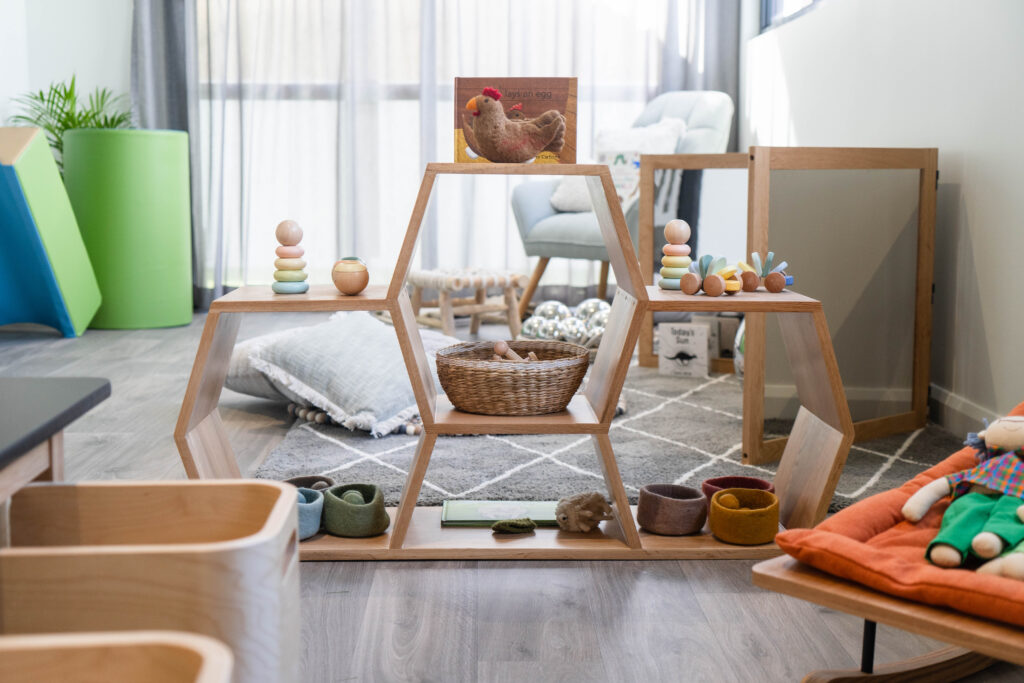
- Spaces that spark curiosity: The learning environment plays a key role in a play-based approach, so look for a centre that offers thoughtfully designed spaces across both indoor and outdoor settings. Ideally, a child should have access to numerous areas, materials, and objects to interact with, explore, and learn from.
- Engaged and responsive educators: Rather than just instructing children, educators and early childhood teachers should act as co-learners and collaborators. Their role is to support children’s natural curiosity and help them engage more deeply with their ideas and surroundings.
- A balance of play and structure: The best providers combine child-led play with intentional teaching moments. While children should be encouraged to explore freely, educators should gently guide activities that stem from their interests.
- Evidence of children’s voices: Look for children’s artwork, project boards, or photos displayed with captions of what they said or asked. This shows the centre values inquiry-based learning and views children as active participants.
- Strong communication with families: Ask how the centre shares updates with parents. Many centres use apps, journals, or daily reflections to show what children are exploring and why. This helps you stay connected and reinforces learning at home.
When you visit a childcare centre, don’t be afraid to ask outright how they incorporate play-based and inquiry-led learning into their approach with questions like:
- How do you incorporate play-based learning into the daily program?
- Can you share an example of a recent inquiry-led project the children worked on?
- How do educators extend on children’s interests or questions?
Supporting play-based and interest-led learning at home
One of the best things about play-based and inquiry learning is that it’s easy to carry these teachings into the home. From open-ended play with blocks to exploring the local park or playing dress-ups, there are plenty of opportunities to encourage play and learning. Foster your child’s curiosity through shared reading, cooking, and outdoor adventures. Rather than giving your child immediate answers to their questions, ask “What do you think?” to prompt them to explore further.
Both play-based and inquiry learning are proven, research-backed approaches to early childhood education that offer real advantages, benefiting children throughout their schooling and beyond. While it can be easy to mistake these approaches as less structured than traditional classroom teachings, in reality, they provide a powerful foundation for learning.
At Kids ELC, we offer an innovative, play and interest-based curriculum led by qualified early childhood teachers. It’s designed to help children build the skills they need for a lifetime of learning. Book a tour to learn more about our approach.